Fixing flasher combination relay in Mercedes-Benz W124
One fine day, while driving my W124 300 TD to do some shopping, I noticed that the turn signals were not working. The green arrows on the instrument cluster were not lighting up, and neither were the exterior turn signal lamps. I also checked the hazard lights — nothing there either.
With the engine off, when I switched the hazard lights on, all I could hear was the rapid ticking of a relay — this is what happens when one of the turn signal bulbs is burned out (the faster flashing rate is meant to get the driver’s attention). Checking the fuses and cleaning their holders yielded no results. So either the combination relay or something else, like a switch or a wire, had failed.
Combination relay
The so-called combination relay combines three relays — for the turn signals, the rear window defroster, and the windshield wiper motor
— into one package. It is located behind the fuse box and is marked N10 in the car’s wiring diagram (W124 230CE schematic with legend). My car is the 300 TD (diesel)
version, but the N10 relay and its wiring are the same across W124 gasoline and diesel models. This is what my unit looks like (the version
for a car with a tow hitch):


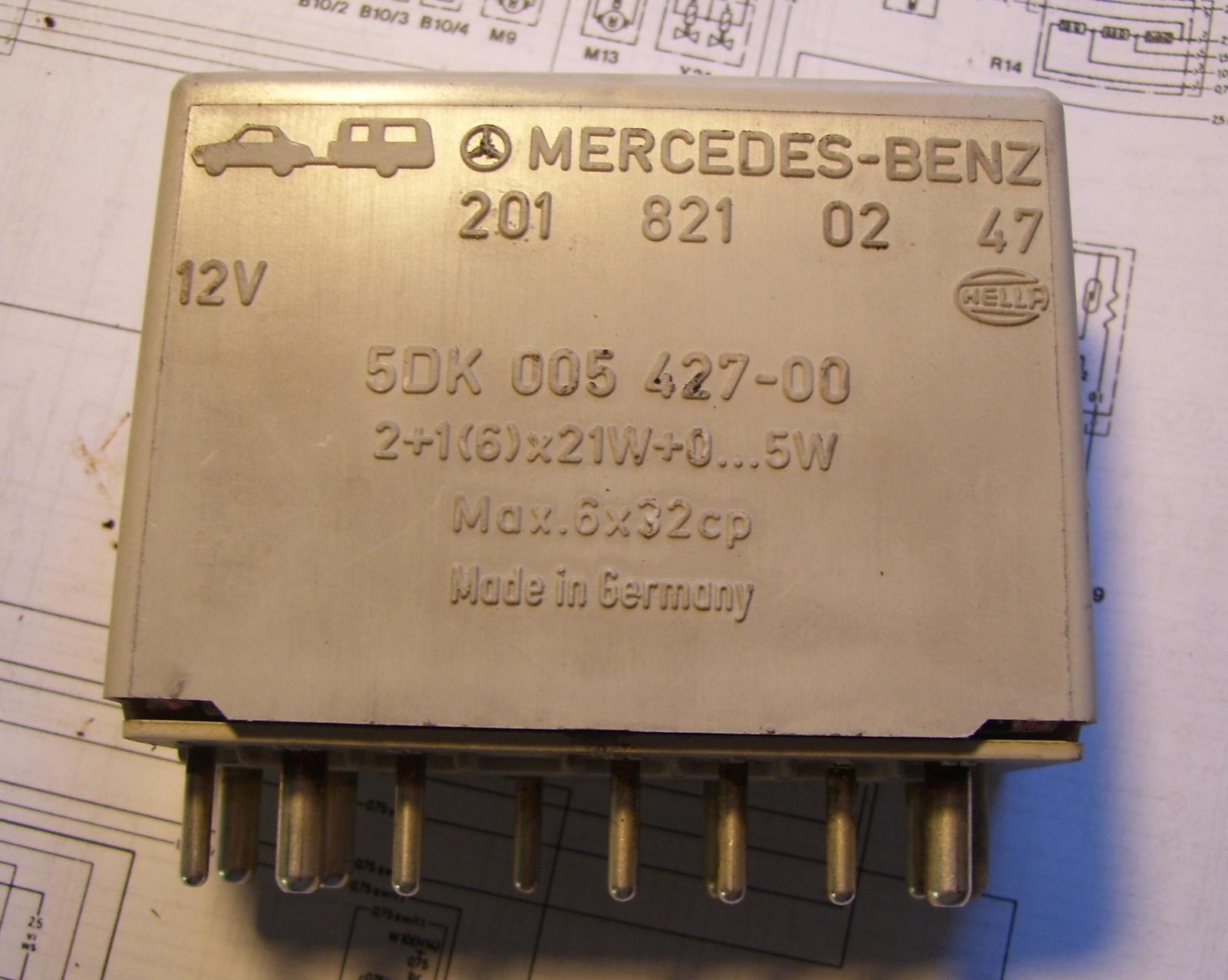
For reference, it has the following markings:
201 821 02 47
5DK 005 427-00
2+1(6)x21W+0...5W
The other part number I’m aware of is 201 821 00 47 (probably the version without a tow hitch). As for the turn signal part, the wiring
diagram shows that the relay’s job is to periodically connect pins 8 and 10:
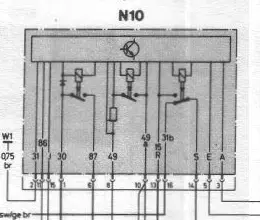
To rule out a problem in the rest of the electrical system, remove the relay and feed +12 V from the car’s battery to pin 10 of the relay
socket. To be on the safe side, do it through a 16 A fuse. With the hazard light switch turned on, the hazard lights should then stay lit continuously. The
turn signal stalk can be tested the same way.
The fix
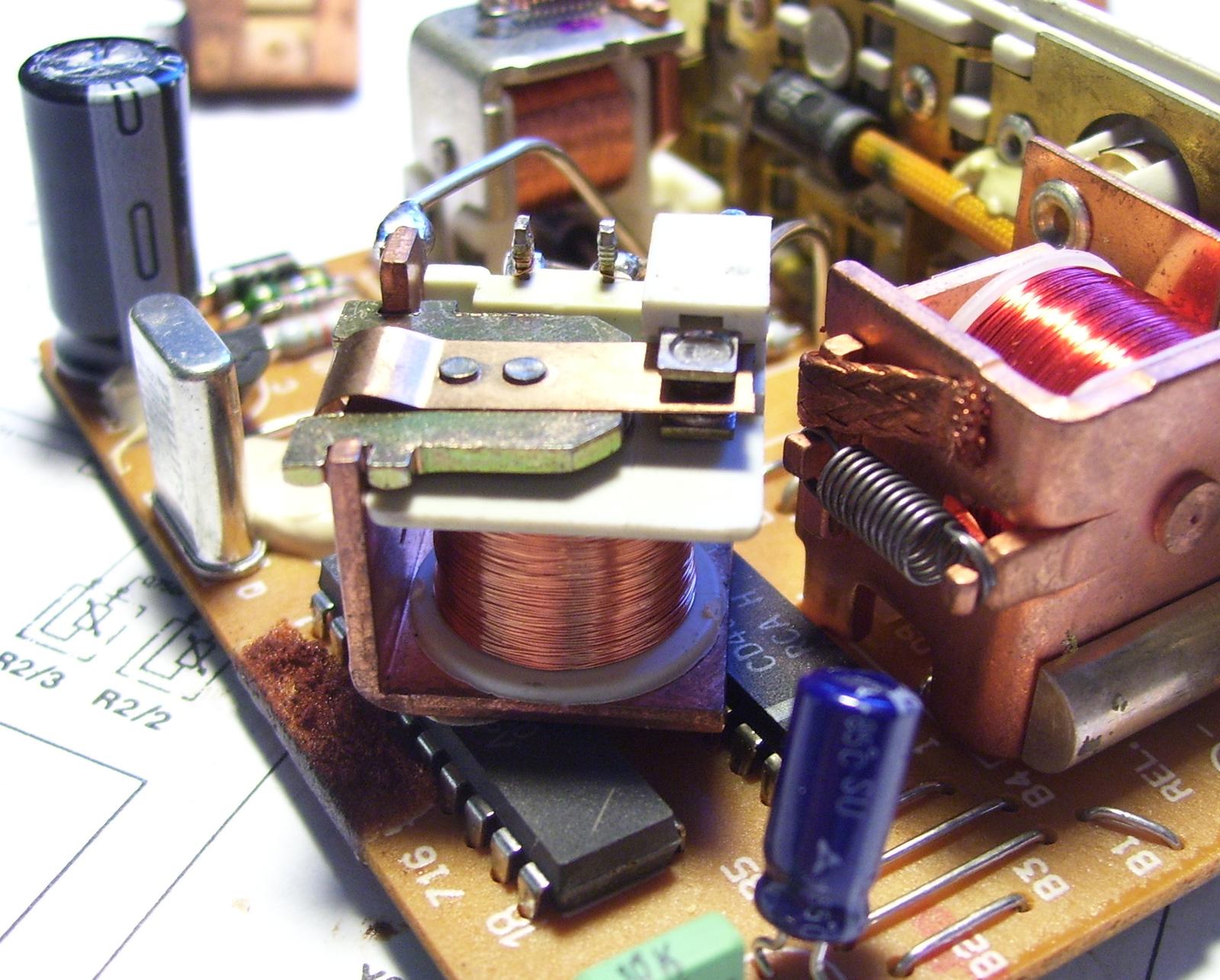
After opening the box, we see a fair amount of electronics. The relay marked with the arrow is the one responsible for the turn signals. In my case, one of its contacts had simply fallen off (!) and was rattling around loose inside the housing (luckily, it did not cause a short circuit).
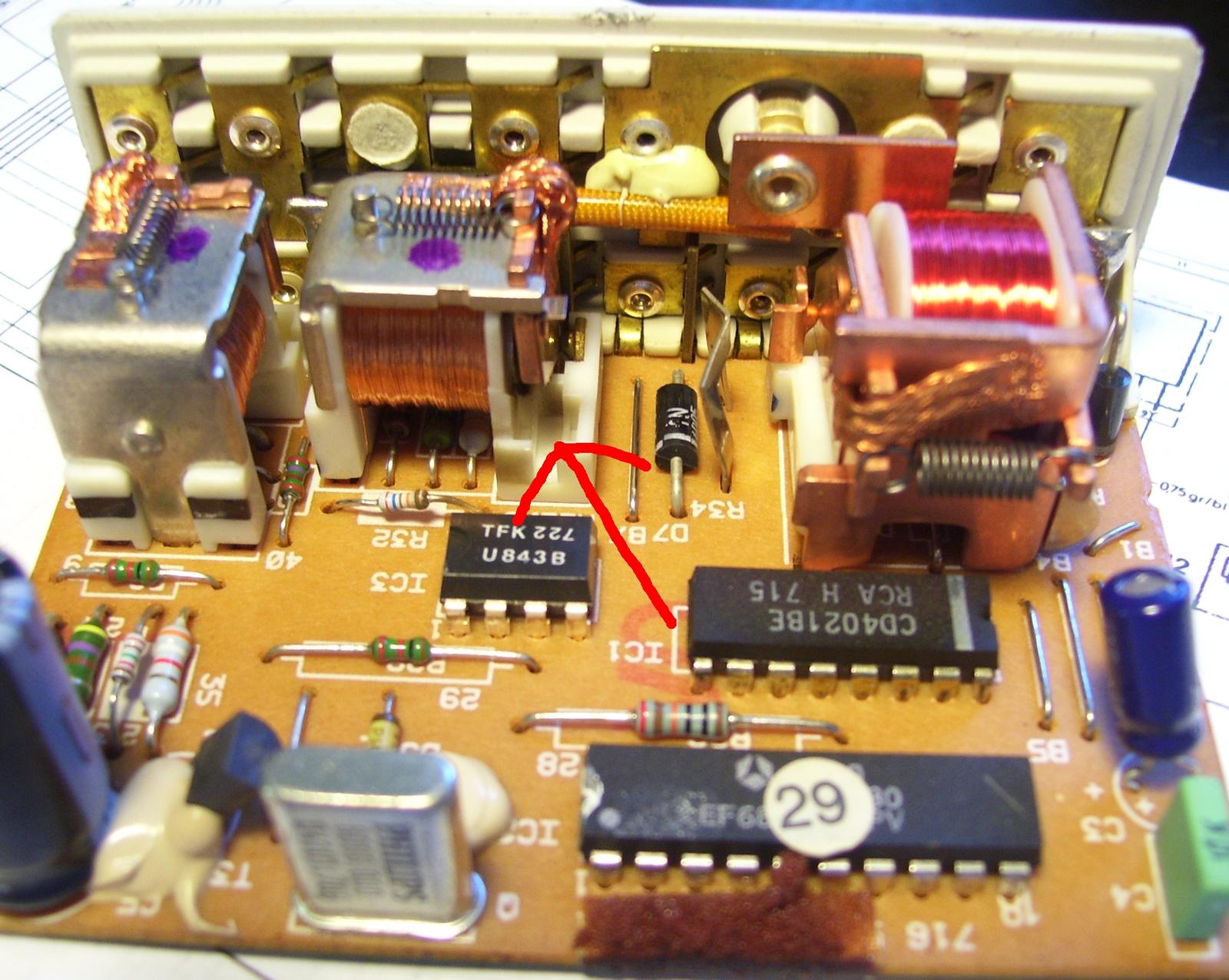
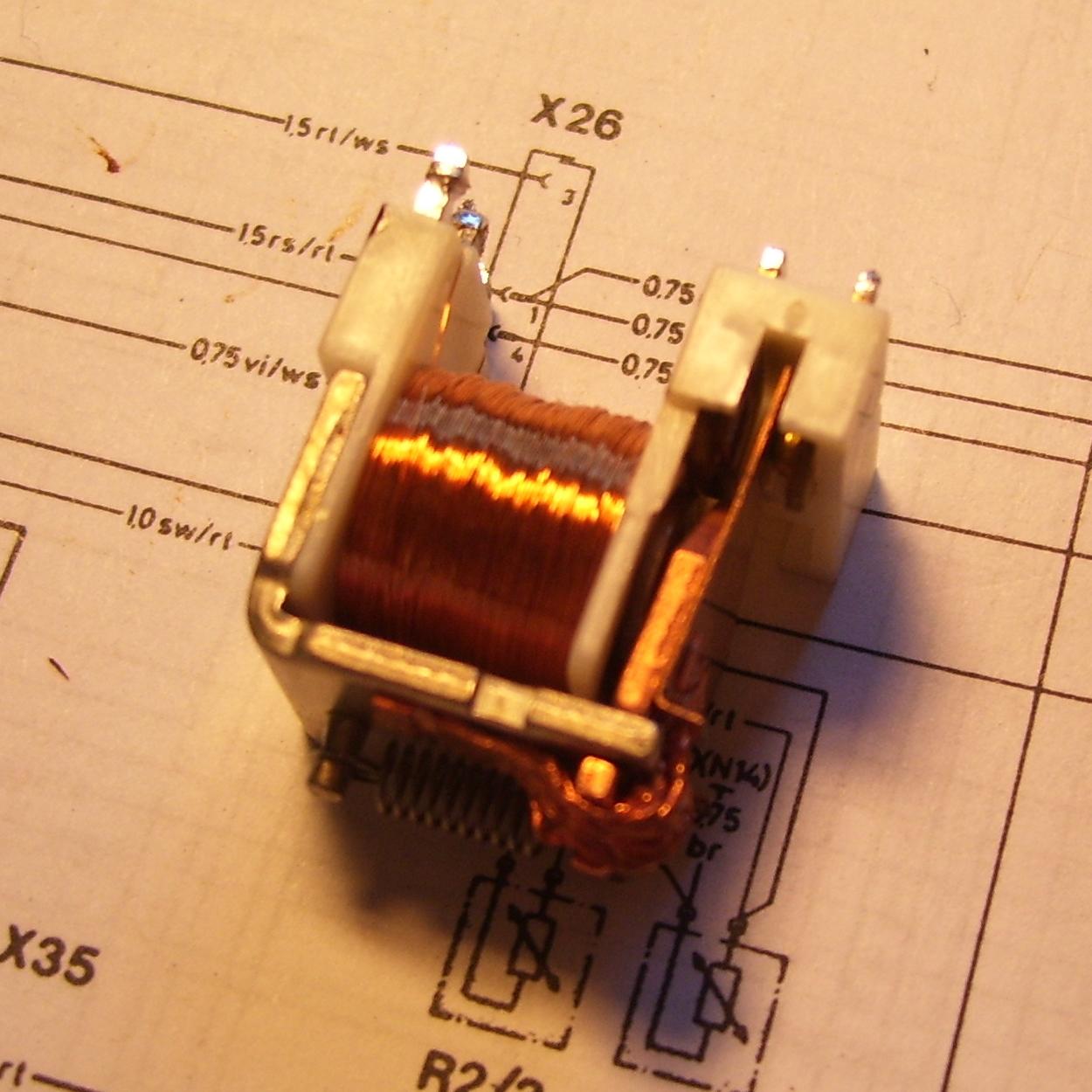
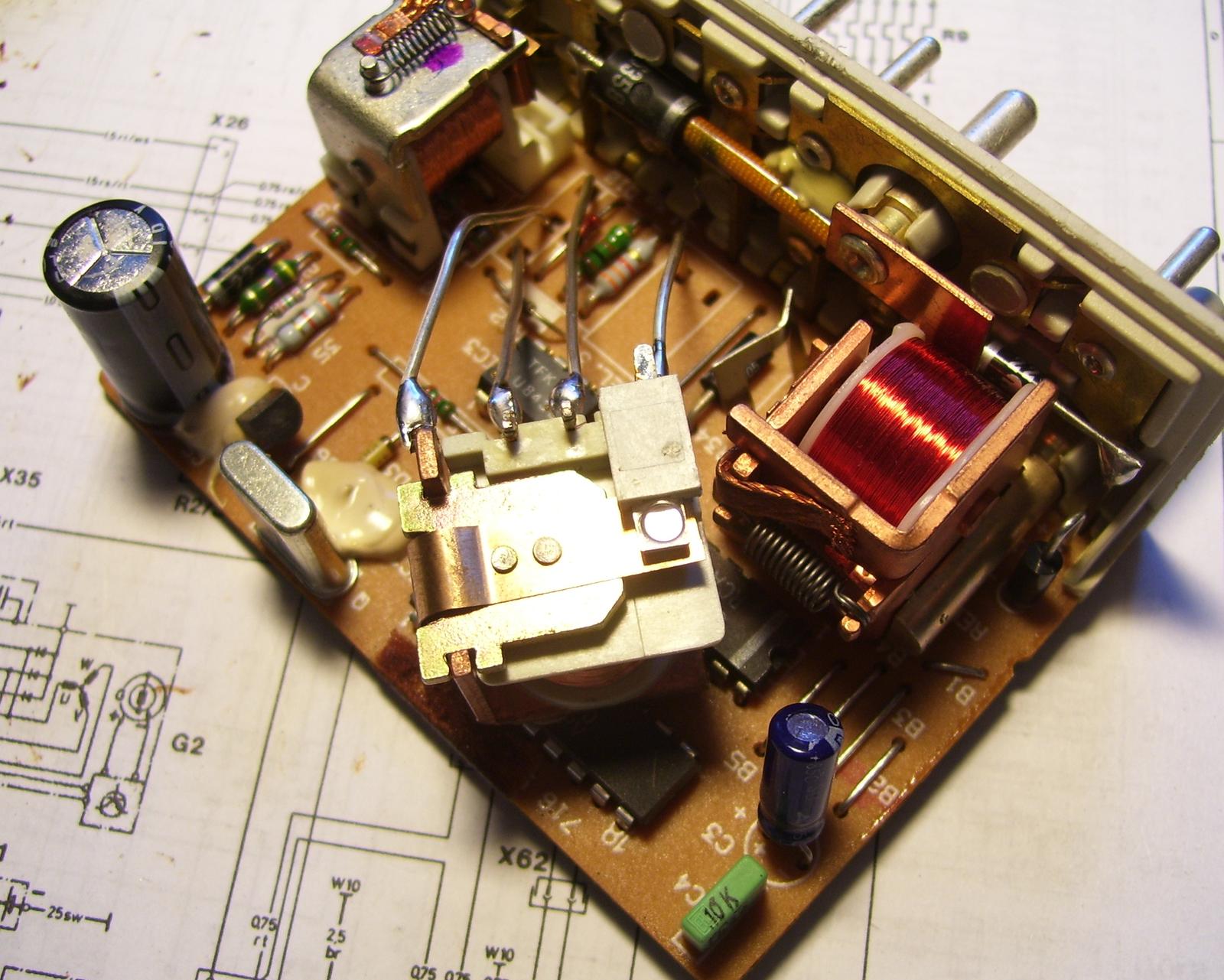
Not having an identical replacement, I chose a relay of a different shape with similar electrical ratings. I simply soldered it in place using extensions made of tinned copper wire. It does not look very professional, but once the whole thing is secured with silicone, the contraption is durable. Take care not to get any silicone on the moving parts of the relay.
Update 2016: The fix held up until I sold the car in 2016.